
Sommario



(Excerpt from the seminar held for the Micropsychoanalysis Cultural Centre of Kazakhstan on 25 November 2025)
Fanti and the concept of attempt
The concept of “attempt” in micropsychoanalysis is a truly original concept (there are no similar terms in traditional psychoanalysis dictionaries or encyclopaedias): it is attributed to Silvio Fanti, who developed and formalised it, with the collaboration of D. Lysek and P. Codoni, first in his book “Micropsychoanalysis” and then in the “Dictionary of Psychoanalysis and Micropsychoanalysis”.
At the dawn of his career, Fanti had constructed a complex theory called “energetic organisation of the void”, borrowing in a rather mechanical way many concepts from quantum physics, whose theories were beginning to shake the international scientific world in those years. Roughly speaking, he hypothesised the existence of energy packets that organised themselves in the void, structuring themselves into attempts, a sort of energetic modules of action.
Fanti was a doctor, but his personal background, his experiences and his travels in the East had greatly accentuated his profound inclination towards a sort of humanism, which he shared with the other giant of micropsychoanalysis, Prof. Nicola Peluffo.
I arrived in Couvet to do my training back in 1981: I had graduated in medicine six months earlier. I began my personal analysis with Prof. Peluffo and soon openly expressed my resistance and reservations to my teacher about a model that I found unacceptable, except for a path that we could rightly define as initiatory, such as that of a religious disciple.
Peluffo was categorical in saying that, in his opinion, the energy model of micropsychoanalysis saturated every possible hypothesis of the vital phenomena of the human being.
Those were different times, distant times, fortunately. A great deal of work has been done, patient work of scientific codification, based on the review of our experiences, which has led to micropsychoanalytic theory becoming increasingly comprehensible and accustomed to a language that can be shared with other schools and other disciplines. ↑
Psychoanalysis and quantum physics
I was able to intuit what Fanti ultimately wanted to communicate to us: as a medical student, I had devoured Fritjof Capra’s ‘The Tao of Physics’, published in 1975, and subsequently read and reread Elisabet Stenger’s ‘Between Time and Eternity’, published in Italian in 1989.
These are two formative volumes for a micropsychoanalyst, the first simpler, the second much more challenging, but both open your mind. I highly recommend reading them if you haven’t already done so.
Fritjof Capra’s The Tao of Physics shows that there are surprising analogies between the discoveries of modern physics (in particular quantum mechanics and special relativity) and ancient Eastern religious philosophies such as Taoism, Buddhism and Hinduism. The author argues that, despite coming from very different approaches — physics through empiricism and science, Eastern philosophies through mystical and meditative experience — both arrive at similar conclusions about the nature of reality, somewhat similar to those theorised by Fanti. This contrast challenges the traditional mechanistic view based on Newtonian physics, proposing instead an integrated, dynamic and interconnected worldview. He describes how these theories have challenged the classical, mechanistic conception of reality, proposing instead a reality made up of vibrating energy and interconnections. Capra highlights the idea that subatomic particles are not solid, fixed objects, but dynamic patterns of energy in continuous vibration, in tune with Eastern mystical concepts such as the cosmic dance of Shiva in Hinduism.
This concept overlaps with that of the ‘granulation of the neutral dynamism of the vacuum’ discussed by Fanti back in the 1980s.
On the other hand, Elisabet Stenger addresses the theme of time not only as a chronological succession of events, but also as a human and philosophical experience, articulating a critique of the dualism between the visible and the invisible, between becoming and being, drawing on the work of another giant, Ilya Prigogine.
Prigogine, a Belgian physicist of Russian origin, emphasised that complexity is not sterile disorder, but a new order that emerges from non-equilibrium, proposing a new scientific logic valid for both the exact sciences and the humanities.
These are profound concepts that most colleagues may find obvious, but in the 1980s, when I first encountered them, they were difficult and almost disturbing. However, they finally demolished the prejudices I had acquired from my scientific training, namely medical training, which was unfortunately steeped in scientism and mechanism. I began to realise that if I wanted to deal with human psychism, I had to move away from the world of objects and take an interest in the world of events, just as quantum physics was beginning to do. ↑
The scientific nature of psychoanalysis
Just a few days ago, I was asked whether psychoanalysis was a science or a kind of narrative. And finally, I got something off my chest. As you know, probably from personal experience, psychoanalysis has been fiercely attacked since its inception: Freud was literally persecuted for the wound he had inflicted on a bigoted society by revealing childhood sexuality.
In modern times, the ‘philosophy of science’ has dealt with this issue through Karl Popper’s famous principle of falsifiability, which states that a theory is scientific only if it is possible to conceive of an experiment or observation that could prove it false. A theory is considered valid if it withstands rigorous attempts to refute it, not if it is confirmed by an indefinite number of tests, since a single experiment can disprove it. The scientific method, therefore, is a process of conjecture and refutation.
Critics use the principle of falsifiability by saying, roughly speaking, that when a patient hears the analyst’s interpretation and finds it absurd and does not recognise themselves in it and contests it, the analyst will say that they are defending themselves and engaging in a process of denial, and interpret this as a rejection of a legitimate ‘falsification’.
Fortunately, psychoanalysis has evolved, above all, we can say with pride, thanks to the micropsychoanalytic technique: when long sessions are held, especially in quick succession, the patient comes so close to perceiving the unconscious contents of the psyche that, only by working on becoming aware of the defence mechanisms they are using, can they recover consciousness, without any interference from the psychoanalyst, whose sole task is to work on lowering their defences, the traumatic memory, very often accompanied by a massive emotional abreaction that tells us that the memory, or at least the conscious reconstruction of the past event, is authentic. The use of so-called ‘interpretation’ is extremely rare in long and closely spaced sessions. This is without considering recent neuroimaging studies that have confirmed the effectiveness of psychoanalysis and other psychotherapies, showing how they lead to observable changes in brain activity using technologies such as functional magnetic resonance imaging (fMRI), PET and SPECT (Single Photon Emission Computed Tomography). These studies highlight changes in cerebral blood flow, metabolism and activity in specific areas of the brain involved in psychological disorders. 1
In particolare, la psicoanalisi mostra effetti simili o anche superiori a molte terapie farmacologiche e psicoterapeutiche in termini di durata e qualità del cambiamento cerebrale. Nei pazienti, l’attivazione delle aree limbiche (come amigdala e ippocampo), corteccia prefrontale e altre regioni coinvolte nei processi emotivi e cognitivi, viene normalizzata o migliorata dopo un percorso psicoanalitico. Inoltre, gli effetti positivi tendono a permanere e spesso aumentano anche dopo la fine del trattamento, suggerendo una capacità della psicoanalisi di produrre cambiamenti profondi e duraturi nel sistema psicologico della persona, non solo sintomatici ma anche relazionali e di personalità.
Questi risultati, evidenziati da studi di neuroimaging, indicano visivamente e con misure biologiche l’efficacia della psicoanalisi e contribuiscono a superare alcune critiche tradizionali riguardo alla sua scientificità, confermando che la psicoanalisi induce modificazioni neurobiologiche parallele al cambiamento psicologico osservato clinicamente. ↑
Attempts and phylogeny
This lengthy introduction was necessary in order to move on to a more clinical and practical dimension. If you have read my informative lecture on the subject from 1999, you will have understood what each of us has experienced in our lives and, above all, in the course of our personal micropsychoanalysis. That there is an energetic network, without obviously getting bogged down in the quality of the definition, which underlies the organisation of phenomena, that while we make plans, invest energy in projects, create groups, ensembles, weave emotional or romantic relationships, it has its own dynamism that remains unknown, probably fuelled by traumatic events that in the secondary, i.e. the conscious, belong to the past but in the unconscious, where time does not exist, are always an eternal present. We delude ourselves into thinking that we make thoughtful and logical decisions, but often the directions of our lives escape any logical interpretation.
For those who have not read it, I will give a very brief summary: I had been invited to give a lecture to young volunteers who worked with children who were often disadvantaged, poor, abandoned, or mentally or emotionally disabled. A lecture that would not have taken place, because I had memorised the wrong date in my diary, making a slip of the tongue. Only a series of seemingly failed daily attempts gave me the chance, quite by chance, to contact one of the organisers, who warned me the day before the event that the date I had noted down was incorrect.
Many of you who have undertaken your own personal genealogical research will have noticed that you are often reviving the attempts/desires of certain ancestors that had been interrupted but whose drive, not yet completely exhausted, we are still subject to. These are the so-called ‘ancestral conditioning’. These guidelines are easy to find and even more frequent in the geographical movements we make in life: we think we are making decisions based on logical and utilitarian needs, but instead we learn that we are retracing routes that our ancestors had also travelled. It is not uncommon for many of those analysed to have stayed in streets or neighbourhoods of huge cities where, unbeknownst to them, some ancestor had lived.
I do not know if you are familiar with Anne Rice’s novels (the most famous being Interview with the Vampire and the Mayfair Witches series) set in this world suspended between reality and imagination (are witches and vampires not forms that have been attributed to traumatic unconscious ghosts for centuries?). There is an institution, a noble secret association made up of eminent scholars, which has always struck me: the Talamasca, as it is called. 2
The main objective of the organisation is to observe, study and document events without ever directly interfering with their activities. Their motto is ‘We observe and we are always here’, which is somewhat similar to what a psychoanalyst should do: neutral, uninvolved, non-judgmental observation.
Observing how a person’s vital attempts have been activated, weakened or strengthened throughout their existence. One of the most welcome concepts in Fanti’s thesis is that a successful attempt (which gives us so much satisfaction on a conscious level) is no different from a (seemingly) failed attempt, which may be paving the way for an even easier path that will reveal itself later on. In Italy, there is a popular saying, I don’t know if it also exists in the Russian-speaking world, which goes: ‘Everything for the best’; the wisdom of our grandparents accustomed us to accepting adversity with neutrality. Mind you, it is not exactly masochistic resignation, it is a kind of relativisation, an attitude of not relying too much on the conscious unfolding of vital projects.. ↑
The patience of the psychoanalyst
How many times, especially in the early years of our profession, have we found ourselves pushing, sometimes directing patients towards certain choices that we believe to be less harmful? The result is a strengthening of the destructive impulse, a bit like teenagers in full Oedipal opposition. Time teaches us the patience to wait for vital attempts to organise themselves and finally have the strength and form to manifest themselves. Our job, I always repeat, is to observe and make these dynamics observable to the patient in the course of their existence. We often manage to grasp them during a long session in historical material, in everyday material (in its repetition), in dreams and even in daytime material (the activity of waking life that precedes the dream, which has obtained a representation that can be identified in the manifest content of the dream).
Lysek argues that the micropsychoanalytic setting based on long sessions favours the emergence of extensive chains of material connected with the deep psyche through which associative links are tied to one another, until they form a meaningful chain, i.e., one that reveals the latent meaning of the material expressed. I quote Lysek: “… an associative link is a broad connection of verbalised elements that end up returning to themselves, but at a deeper level, thus revealing a dynamism and/or structure of the deep psyche… The formation of such associative links probably occurs in other settings, but they will not be spontaneous; they will need an incentive from the analyst, with the risk that they will not be well assimilated by the psyche of the analysand. The formation of associative links occurs when micropsychoanalysis has reached ‘cruising speed’; they will then form spontaneously. Under these conditions, interpretations can be based on material that has naturally come to the surface and has had sufficient time to be processed, thus minimising the risk of error, of being premature or overestimating the analysand’s insight. Above all, a session that ends by forming an associative link creates a good quality contact with the unconscious’. (End of quote). 3
One of the requirements for being a true psychoanalyst, as I mentioned a few days ago during a conference with Dr Gioia Marzi, is the ability to be patient. The word ‘patience’ in Italian has its etymological origins in Latin: the root is the Latin verb patior, which means ‘to endure’ or ‘to suffer’. The participle patiens means ‘one who endures’. Those who do our job quickly learn how much the analyst endures. In part, we frame this in terms of neutrality, refraining from judging, blaming, advising or expressing our personal, moral or religious opinions about the patient or the situations they describe, and in part in terms of so-called abstinence: The analyst avoids satisfying the patient’s affective, material or emotional demands in order to encourage the development and analysis of transference.
It is not a question of wearing a mask of coldness, but of never entering into the manipulative game of patients who, consciously or unconsciously, try to make us play a repetitive role that reconstructs over and over again the frustration of the compulsion to repeat. All this is made easier and less burdensome by the deep awareness, which unfortunately cannot be learned but comes from experience accumulated along the way, that the patient is moved by his attempts. He is a sort of entity to whom the long session offers the possibility of acquiring minimal variations in form, step by step, which he constructs without his knowledge, unfolding potentialities suppressed by the vortex of the compulsion to repeat. At the end of this seminar, this evening, try an experiment: think back over your entire existence, your changes in form, both physical and psychological, your successes and failures, your geographical movements, the slowdowns and sudden accelerations of your vital attempts: little by little, you will experience yourself as a ball of energy and matter that has been shaped by joys and sorrows, successes and failures, in which not only those that have brought you satisfaction and joy have made you who you are, but also doubts, expectations, separations, bereavements, suffering, even organic illness, have made you who you are today.
It is a mental experiment that will accustom you to not trying to force either the timing or the direction of your psychic work. After all, we are like Talamasca for our patients: we observe and we are always there. We work to dissolve the resistance that the patient has built up to protect themselves from the penetration of traumatic ghosts into the conscious compartment, allowing an extension of consciousness (where the Id was, now there is the Ego) and freedom of attempt. ↑
(Text translated with AI and reviewed by the author)
Note:
1 – Buchheim A, Labek K, Walter S, Viviani R. A clinical case study of a psychoanalytic psychotherapy monitored with functional neuroimaging. Front Hum Neurosci. 2013 Oct 23;7:677. doi: 10.3389/fnhum.2013.00677. PMID: 24167481; PMCID: PMC3805951.
– American Psychiatric Association, Brain Imaging Shows the Impacts of Psychotherapy, 6 Gennaio 2020. ↑
2 – I am referring here to literary sources. Unfortunately, the recent adaptation for television completely distorts and demeans the neutral role of Talamasca. ↑
3 – D. Lysek, Principi di una micropsicoanalisi del XXI secolo, Psicoanalisi e Scienza, 15 ottobre 2024. ↑

E’ autore di 77 tra libri e pubblicazioni scientifiche. Ha partecipato in qualità di relatore o di presidente di sessione a numerosi Convegni scientifici nazionali ed internazionali.
Il suo libro “La vita: involucro vuoto”, pubblicato da Borla nel 1993, è stato in adozione dal 1994 presso la Cattedra di Psicologia Dinamica dell’Università di Torino.
Nel 1994 gli viene assegnato il “Premio Nazionale Ciociaria per la Medicina”.
E’ l’ideatore e fondatore della rivista multimediale “Psicoanalisi e Scienza”, la più seguita rivista di psicoanalisi on line al mondo in lingua italiana (Fonte: Entireweb, Alexa, Google, Virgilio, Arianna., etc.). Nel 2012 partecipa come Relatore alla Rassegna Scientifica di BergamoScienza.
Nel 2013 espone i suoi studi sull’nterazione materno-fetale nella Sessione Speciale dell’ XI Congresso Mondiale di Medicina Perinatale a Mosca con la relazione “Intrauterine Imprinting”.
Nel 2024 riceve il Premio Accademico d’Onore della Accademia Culturale Internazionale Cartagine 2.0.
Nel 2024 docente ad Almaty – Kazakhstan presso il workshop di psicoanalisi sul tema della violenza, promosso dall’Università di psicoanalisi di Mosca in collaborazione con l’Istituto svizzero di micropsicoanalisi.
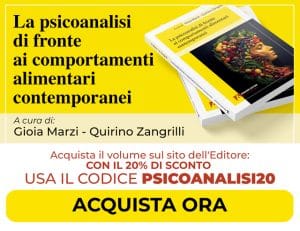
Nel 2025 pubblica come curatore il libro “LA PSICOANALISI DI FRONTE AI COMPORTAMENTI ALIMENTARI CONTEMPORANEI” presso Armando Editore
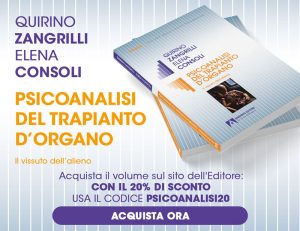
Nel 2025 pubblica il libro “PSICOANALISI DEL TRAPIANTO D’ORGANO – IL VISSUTO DELL’ALIENO” presso Armando Editore
Doctor Quirino Zangrilli was born in Fiuggi in 1955. Graduated with honours in Medicine and Surgery in 1980, he practices Psychoanalysis, with intensive method, since 1982.
He is author of 77 scientific pubblications. He has attended as speaker or president of session to many national and international scientific Conventions.
His book “La vita:involucro vuoto” (Life: empty involucre), published by Borla in 1993, has been in use by the Chair of Dynamic Psychology at Turin’s University since 1994.
He is the author and founder of the multimedia review “Psicoanalisi e Scienza” (Psychoanalysis and Science), the most read Italian on line review of psychoanalysis.
In 2012 he participated as a Speaker at the Scientific Festival of BergamoScienza.
In 2013 he illustrated his research on the maternal-fetal interaction in the Special Session of the XI World Congress of Perinatal Medicine in Moscow with his relation “Intrauterine Imprinting”.
He is visiting teacher at Moscow Institute of psychoanalysis and training psychoanalist of Swiss Institute of Micropsychoanalysis.
In 2024 he is a teacher in Almaty – Kazakhstan at the psychoanalysis workshop on the topic of violence, promoted by the Moscow University of Psychoanalysis in collaboration with the Swiss Institute of Micropsychoanalysis.
In 2024 he received the Honorary Academic Award of the Carthage 2.0 International Cultural Academy
In 2025 he published as an editor the book “PSYCHOANALYSIS IN THE FACE OF CONTEMPORARY EATING BEHAVIOURS” at Armando Editore
In 2025 he published the book “PSYCHOANALYSIS OF ORGAN TRANSPLANTATION – THE EXPERIENCE OF THE ALIEN” at Armando Editore
—————
 Le Le Docteur Quirino Zangrilli est né à Fiuggi en 1955. Diplômé avec mention en Médecine et Chirurgie en 1980, il pratique la psychanalyse depuis 1982, en utilisant une technique intensive.
Il est l’auteur de 77 livres et publications scientifiques.
Il a participé en tant que conférencier ou président de session à de nombreuses conférences scientifiques nationales et internationales.
Son livre « La vita: involucro vuoto » (La vie : une coquille vide), publié par Borla en 1993, a été adopté en 1994 par la chaire de psychologie dynamique de l’université de Turin. En 1994, il a reçu le “Prix national Ciociaria de médecine”.
Il a conçu et fondé le magazine multimédia “Psicoanalisi e Scienza”, qui est le magazine de psychanalyse en ligne en italien le plus suivi au monde. (Source : Entireweb, Alexa, Google, Virgilio, Arianna., etc.).
En 2012, il a participé en tant que conférencier à la colloque scientifique de BergamoScienza.
En 2013, il a exposé ses études sur l’interaction materno-fœtale lors de la session spéciale du XIe Congrès mondial de médecine périnatale à Moscou avec le rapport “Intrauterine Imprinting”. Il est chargé d’enseignement au cours de spécialisation de trois ans en psychanalyse, psychothérapie psychanalytique et consultation psychanalytique à l’Université de Moscou.
Il est membre didacticien de l’Institut Suisse de Micropsychanalyse et de la Commission pour la Pratique de celui-ci.
En 2024, il enseigne à Almaty – Kazakhstan à l’atelier de psychanalyse sur le thème de la violence, promu par l’Université de Psychanalyse de Moscou en collaboration avec l’Institut Suisse de Micropsychanalyse.
En 2024, il reçoit le Prix Académique Honoraire de l’Académie Culturelle Internationale Carthage 2.0.
En 2025, il publie en tant qu’éditeur le livre « LA PSYCHANALYSE FACE AUX COMPORTEMENTS ALIMENTAIRES CONTEMPORAINS » chez Armando Editore
En 2025, il publie le livre « PSYCHANALYSE DE LA TRANSPLANTATION D’ORGANES – L’EXPÉRIENCE DE L’ÉTRANGER » avec Armando Editore
—————
Доктор Квирино Зангрилли родился в Фьюджи в 1955 году. В 1980 году с отличием окончил факультет медицины и хирургии, с 1982 года интенсивно занимается психоанализом.Является автором 77 книг и научных публикаций. Участвовал в качестве докладчика или председателя сессии в многочисленных национальных и международных научных конференциях.
Его книга «Жизнь: пустая оболочка», изданная Borla в 1993 году, с 1994 года используется на кафедре динамической психологии Туринского университета. Удостоен национальной премии «Ciociaria» в области медицины.
В 2024 году является преподавателем в Алматы – Казахстан на семинаре по психоанализу на тему насилия, проводимом Московским университетом психоанализа в сотрудничестве со Швейцарским институтом микропсихоанализа.
В 2024 был награжден Почетной академической премией Академии Международной Культуры «Карфаген 2.0».
В 2025 году он опубликовал в качестве редактора книгу «ПСИХОАНАЛИЗ В РАМКАХ СОВРЕМЕННОГО ПИЩЕВОГО ПОВЕДЕНИЯ» в издательстве Armando Editore
В 2025 году он опубликовал книгу «ПСИХОАНАЛИЗ ТРАНСПЛАНТАЦИИ ОРГАНОВ – ОПЫТ ЧУЖОГО» совместно с Армандо Эдиторе