In a well-known Italian town called Loreto, in the Marche region, there is a Catholic sacred artifact known as the Holy House, which is said to contain part of the home of Mary of Nazareth, that is, the Virgin Mary. It is kept in the Loreto sanctuary, enclosed within a protective structure designed by Bramante. You may well wonder, even supposing its authenticity were proven, how it could have travelled from ancient Israel to that hill in the Marches.
According to tradition, in early May 1291 some angels took the Holy House, lifted it up into the air and flew away with it, setting it down on 10 May 1291 in Tersatto (now a district of the city of Rijeka), in Croatia. However, in that place pilgrims were often prey to thieves and criminals, so three years and seven months later the angels supposedly lifted the House once more and flew with it towards the Marches, placing it near Ancona, in the spot where the church of Santa Maria Liberatrice di Posatora now stands – a name that popular etymology traces back to that very event: posa-et-ora (“pause and pray”).
There it remained for nine months – a rather evocative length of time – and then the angels are said to have raised it yet again and placed it near Porto Recanati, in an area called “Banderuola”, where a small church still stands today. At that time there was a small wood there belonging to a noblewoman from Recanati named Loreta, so pilgrims would say: “Let’s go to Our Lady of Loreta”, and from that popular expression the town of Loreto later took its name. It was in that little grove of Loreta that, so the story goes, some shepherds saw a blinding light emerge from the clouds and, behind the light, the house itself.
However, the spot was too close to the sea and thus exposed to the dangers of Saracen raids; moreover, bandits again began to gather there to rob the faithful who came on pilgrimage. So, eight months later, the House was once again moved by angels onto land belonging to two brothers, Counts Simone and Stefano Rinaldi di Antici, who soon began to take advantage of the pilgrims and to fight over the money extorted from the devout. Once again, after just four months, the angels lifted the House and, in December 1294, set it down in the middle of the road from Recanati to the port, on public land at the top of a hill (Mount Prodo), so that no one could claim ownership or exploit it. 1
For those who do not believe in the existence of angels, some historical research suggests that in 1291 the Crusaders were expelled from the Holy Land by the Muslims and that some Christians, in order to save what they believed to be the Virgin’s house from destruction, transported it first to ancient Illyria, to a place commemorated by the shrine of Tersatto. Later, in the night between 9 and 10 December 1294, it was supposedly carried by ship first to the port of Recanati and then up to a hill along a public road, where it is still housed today.
And yet, for hundreds of years, millions of people all over the world have genuinely believed (and many surely still do) that supernatural beings called angels placed a house on their shoulders, flew with it through the night from Israel to Croatia and then from there to the Marches. A collective delusion made possible by an invincible power in the Western world – Holy Mother Church – and by an army of powerful, influential officials, its cardinals, bishops, and priests, who encountered and channelled the human desire to be protected by omnipotent beings in a humanity for which critical, scientific thinking still lay far in the future.
Needless to say, there is no wish here to offend anyone’s religious sensibility. However, it is fair to say that if one of us today were to start claiming to have repeatedly seen strange winged beings who, acting together, lifted a car and moved it from Rome to Milan, we would strongly recommend a psychiatric evaluation. Such a claim would be deemed, unless backed by irrefutable, scientifically verified evidence, a delusional syndrome, and we would conclude we were dealing with a psychotic person. But when the same experience is shared on a vast scale, codified into strict norms and rituals and embedded into what is commonly called religion, the delusional belief is transformed into what Freud called an illusion.
The Woke Religion
The very same phenomenon, has taken place in much of the Western world, where a kind of transnational church preaching a new religion called “Woke” has deliberately tried to impose a collective delusion on millions of people through its officials: influencers, journalists, teachers, politicians, music and TV celebrities, backed by millions of dollars. According to this new creed, genders are no longer two, but countless and ever-shifting.
In this work I will retrace the stages of Freudian and psychoanalytic thought on sexual phenomena, from the moment of conception through to adult life. In pre-Freudian times, sexuality was considered the exclusive domain of adult life, fundamentally aimed at procreation and confined to the genital apparatus. Before Freud, only a perceptive Hungarian paediatrician, Lindner, had argued that the infant is driven to suck the breast not only by hunger and the need for nourishment, but also by the desire for sexual gratification, which continues even after hunger has been satisfied.
Few people know that precisely in the years when Freud began to build his theory of infantile sexuality – from his study trip to Paris and Berlin in 1885–86 to his self-analysis in 1897 – he was head of the outpatient clinic for nervous disorders at the Vienna Paediatric Institute, directed by Max Kassowitz, meaning that he actually worked with children. For ten years, from 1886 to 1896, Freud treated children three days a week, and this activity was in fact his most constant professional commitment. It would be interesting to know why Freud disliked recalling this long experience and never included it among his formative stages. 2
On the contrary, as Carlo Bonomi notes, Freud showed a systematic tendency to erase all traces of it: “not only do his theoretical and autobiographical writings fail to acknowledge the importance of this paediatric training, but on several occasions and in different ways he tried to convey the message that his medical work with children had played no role in the beginnings of psychoanalysis”. 3
In his paper “On the History of the Psychoanalytic Movement”, he even wrote that his initial ideas on infantile sexuality arose solely from reflections on the analysis of adults, since he had lacked “the opportunity of making his observations directly on children” – a substantial falsehood. One may hypothesise that his discovery of what he later called the child’s polymorphously perverse position struck him so deeply, clashing with his traditional upbringing, that it took him decades to digest the emotional shock.
Nor should it be forgotten, as Rossana Ceccarelli sharply reminds us, that when “Three Essays on the Theory of Sexuality” appeared in 1905, Freud received the harshest criticism. Only one thousand copies of the first edition were printed, and it took more than four years to sell them; two thousand copies were printed of each of the next two editions, and again they took just as long to sell; his total earnings amounted to 262 crowns (53.08 dollars)”.4
Already then, a form of “political correctness” existed, appropriate to that era, which made those ideas unwelcome.
The followers of the new woke religion and of gender fluidity maintain that, while biological sex is binary and scientifically defined, gender is fluid and can be deconstructed and reconstructed culturally. The term “gender fluid” describes a gender identity that is not fixed or stable over time, but can change or oscillate between different gender identities depending on the moment or situation. Being gender fluid means that a person can be (not merely feel) at different times more masculine, more feminine, neutral, non-binary, or some mix of these identities. This flexibility allows someone to move along the gender spectrum without being rigidly anchored to a single gender; the fluidity may appear over short or long periods and is not necessarily tied to the biological sex assigned at birth.
In my opinion, accepting such a position discards any stable process of identification, identity, and psychic stability. Psychoanalysis understands identification not as a selective, conscious choice but as an unconscious mental process, often used as a defence mechanism as well as a building block of personality. One cannot simply choose which aspect to identify with; it is an all-or-nothing mechanism, so remaining in a state of sexual non-identification actually entails the risk of a fragmentation of the ego.
Not only that, but the idea of fluidity totally clashes with the well-established theory of childhood fixation of sexuality. What do we mean by fixation?
We mean the fact that libido, in its sexually aggressive form, remains strongly linked to people or images, reproduces a certain way of satisfaction, and remains organized according to the characteristic structure of one of its evolutionary stages. Fixation can be manifest or constitute a permanent potentiality that opens up to the subject. The notion of fixation is generally framed within a genetic conception of psychosexual development that implies an orderly progression of the libido (fixation at a stage). But it can be considered, independently of any genetic reference, within the framework of Freud’s theory of the unconscious as indicating the mode of transcription of certain representative contents (experiences, “imago,” fantasies) that persist unchanged in the unconscious and to which the drive remains attached. Using an effective metaphor that is very dear to me, fixation imprints the reaction/action patterns that are repeated, as if they were lines of computer code that, every time they are reread, come back to life and perform a repetitive existential mode. Anyone with sufficient clinical experience knows that fixation nuclei exist, that they are organizers of the individual mental structure, and that taming or dissolving them is one of the titanic undertakings of our work.
Obviously, the existence of powerful magnets that organize and attract people’s instinctual energies clashes completely with a supposed fluidity of gender.
From this point of view, fluid gender is a mask for the failure of the physiological process of sexual maturation, a failure of the process of identification, a persistence in a perverse-polymorphous infantile state. We certainly do not represent adult sexuality as a monolith; we can all recognize in our sexual behavior remnants of various childhood stages. We would not kiss during intercourse if there were no residual memory of oral gratification, nor would there be touching of orifices and non-genital organs if there were no residual urethral, perineal, or anal fixations. But when the vast majority of people think about their gender, they have no doubt in defining it according to their chromosome set.
The vast majority of homosexuals are also aware of their gender. If a homosexual male legitimately places himself in a passive-receptive position, in accordance with his psycho-evolutionary history, he does not need to say “I am a woman.” If he does so, it is because he is giving body to an omnipotent fantasy of bodily transformation, sometimes physiologically frequent in children’s dreams, which is normally destined to yield to the reality principle.
If I am male and want to be a woman, I have the perceptual impediment of having a penis and testicles: I can have surgery to remove my unwanted genitals, take hormones for the rest of my life, and create a receptive sexual apparatus, but the idea of really becoming a woman implies a denial of the path that was necessary to become anatomically receptive. Denial is a psychotic mechanism.
The Contribution of Debra Soh
One of the figures who has made a substantial contribution to the critique of gender fluidity is the scientist and writer Debra Soh, widely known for her book The End of Gender: Debunking the Myths About Sex and Identity in Our Society, a scientific essay that challenges contemporary woke notions about gender fluidity and sexual identity, offering a perspective grounded in neuroscientific and sexological data. Many of the contents of this article, especially those of a biological and neuro‑hormonal nature, are deeply indebted to her foundational work and, above all, to her courage.. 5
According to Soh, from a biological standpoint sex is defined by chromosomal makeup and by the type of gamete produced: female individuals produce ova, male individuals produce sperm; at present, no other types of sex cells are known in humans. Gender is understood as the phenotypic manifestation of biological sex, rooted in chromosomes and their developmental processes, and not as a purely social construct that can be reshaped at will. The binary structure of gametes, male or female, underpins the binarity of sex, while deviations such as chromosomal anomalies are often associated with clinically relevant pathological conditions and therefore do not belong to normal physiology. Rare conditions such as hermaphroditism do not call into question the binary nature of the sexual system, just as polydactyly does not invalidate the fact that having ten fingers is the standard and most functionally advantageous morphological arrangement from an evolutionary point of view.
Soh highlights that biological factors exert a significant influence on gender identity and sexual orientation, affecting prenatal brain development from roughly the seventh week of gestation, when specific hormones induce long‑lasting changes in neural structures. Psychosexual development therefore begins before birth: sex chromosomes and hormones are the main prenatal determinants of gender‑related neurobehavioural phenotypes across the entire life span. Gene expression during the embryonic phase sets in motion the processes that generate sexual differences, while variability in prenatal exposure to testosterone contributes to behavioural and cognitive differences between males and females and also helps explain the diversity observed within each sex. In addition, males and females display distinct response patterns to the same stimuli and signals involved in neurobehavioural development.
In the early stages of embryonic development, the genital ridges differentiate into ovaries or testes depending on the expression of specific genes, among which the SRY gene is crucial for triggering the molecular cascade that leads to testis formation. Subsequently, varying combinations of genes, hormones, and receptors regulate the highly integrated process of sexual differentiation. Throughout the entire life cycle, males and females present multiple distinct physiological and neurobehavioural phenotypes (sexual dimorphism), ranging from obvious morphological differences to more subtle variations in the tendency toward specific behavioural patterns. 6
The placenta, which constitutes the functional interface between mother and fetus, plays a central role in hormone synthesis and in modulating fetal development; it is sexually dimorphic because it contains fetal tissue with either an XX or XY chromosomal set and exhibits different modes of functioning depending on the sex of the fetus. Prenatal exposure to androgens can induce the masculinisation of behaviour in female individuals, supporting the hypothesis that fetal testosterone exerts a lasting organisational effect on neural circuits involved in typical sexual behaviours. In female fetuses, testosterone levels are very low and derive mainly from the fetal and maternal adrenal glands, the maternal ovaries, and adipose tissue, whereas in male fetuses they are higher thanks to testicular production.
Exposure to exogenous testosterone produces further masculinisation of behaviour in females, while the absence of exposure to significant levels of testosterone favours the emergence of typically feminine behavioural patterns. Taken together, these observations converge on the idea that the female developmental pathway represents the “default” trajectory, which is modified in a male direction only when there is sufficient prenatal androgenic activation.
In humans, in continuity with what is observed in other mammals, prenatal androgen programming plays a significant role in shaping neurobehavioural sex differences, producing long‑term effects starting from the first weeks after conception. Higher exposure to testosterone has been associated with increased visuospatial and instrumental abilities, whereas lower levels are correlated with more developed social and empathic skills.
Inter‑individual variability in in‑utero testosterone levels, modulated by factors such as maternal age, weight gain during pregnancy, specific hormonal treatments, genetic background and random variation, gives rise to a wide spectrum of behavioural expressions. Within this framework, a female fetus exposed to relatively high concentrations of testosterone may develop typically masculine behavioural traits while nonetheless maintaining a female biological sex and gender.
What do these data tell us, essentially? They confirm the obvious: that gender, like sex, is profoundly influenced by biology; that it is shaped in utero during a phase of relative cellular totipotency; and that, under the influence of testosterone levels, it becomes anchored to inescapable and irreversible developmental directions. A cultural superstructure can certainly be placed upon this reality, bent through manipulation when driven by the conscious ego or by delusion in the case of psychotic breakdown, but it remains a superstructure: it does not coincide with reality.
Moreover, if, in denial of the evidence, one were to claim that gender is purely a free choice or a product of society, one would then have to justify and regard as scientifically grounded attempts to “reconvert” homosexual orientation: if gender can be changed, then homosexuals can be “cured”. This is typical of a certain Marxist‑derived culture that blames the social system for everything, an operation already carried out with the controversial Basaglia Law in Italy, which dismantled psychiatric asylums: although it had the undeniable merit of exposing their dark side, by theorising that mental illness is solely the product of a distorted society and by dreaming of a New Man, it has in fact completely undermined the treatment of psychiatric patients in Italy, a fact that is beyond dispute.
What is known, instead, is that mental illness results from deep instinctual conflicts residing unconsciously in the individual psyche, and in some forms from underlying bio‑organic dysfunctions. One can build the most humanly utopian society imaginable; the Oedipus complex will always exist, along with its psychic consequences, which I has described as the organiser of the vital process.
Psychoanalysis and Sex
So much for biology. What can psychoanalysts like us add?
From a concrete, clinically grounded perspective, there is strong reason to consider the hypothesis of Fanti, Codoni, Peluffo and Lysek on the existence of a prenatal psychic life that profoundly shapes human existence as an established fact. On this point we endured violent attacks up to the 2010s, that is, for over forty years; today, however, a search of the international scientific literature on fetal psychic life yields thousands upon thousands of studies that support it. Intrauterine psychism, inseparable from biology, lays the tracks along which psychic life will unfold in adulthood. My teachers taught me that psychic life runs from the intrauterine period to about age five or six; after that, everything is repetition, more or less disguised – an axiom that I have consistently verified over more than forty years of professional practice. Considering only the biological and genetic aspects of the intrauterine condition, Molly Fox and Laura M. Glynn remind us that: “Environmental conditions determine which particular phenotype will be expressed among the wide array of potential phenotypes (the concept of developmental programming). In this context, the intrauterine phase of life represents a particularly important period because during this time, phenotypic plasticity is the greatest in the life span and critical developmental processes occur with lifelong, often irreversible consequences (e.g., cellular proliferation, tissue differentiation, and organ development). In the process of prenatal development, an embryo or fetus detects and responds to biochemical cues in the intrauterine environment, altering developmental trajectories that shape the phenotype. Many traits involved in neurobehavioral sex differences and sex-typical cognition and behavior exhibit high degrees of phenotypic plasticity, with hormonal cues exerting programming effects during prenatal development”. 7
Gender dysphoria does exist; very often it appears alongside eating disorders, and quite often lies at their origin: a profound difficulty, rooted in intrauterine and early childhood trauma, frequently including sexual abuse or assault, which makes it impossible to accept one’s biological sex. Food restriction or, conversely, bulimic traits and obesity are attempts to rewrite the body’s shape, to modify or erase secondary sexual characteristics experienced as dangerous attractors.
Gender‑fluid theory is, in this sense, a powerful form of social conditioning, a veritable religion in a phase of psychotic escalation. This religion has been so pervasive that, in the past, setting out theses such as the ones discussed here was extremely difficult, at the cost of scientific ostracism or, worse, economic or even legal persecution. Countless colleagues in the USA and Western Europe have lost university chairs, jobs, publishers and more, precisely because they were systematically persecuted.
Today it is finally possible to state that woke culture – the idea of a freely chosen and potentially ever‑changing gender – is the expression of a pre‑Oedipal, and therefore borderline if not frankly psychotic, mental organisation that seeks to protect infantile polymorphous perversity, that phenomenon whereby the child tends to use any body region and any object, animate or inanimate, as an equivalent source of pleasure. Psychoanalysts are hardly “fans of the missionary position”; it is well known that traces of this pansensuality are preserved in adult psychism and have a legitimate, often playful economic role in adult sexual satisfaction. However, the Freudian genetic theory of infantile psychosexual development, organised into stages of libido organisation, is taken as established:
Oral stage (0–1 year): pleasure centred on the mouth and its functions.
Anal stage (1–3 years): pleasure centred on the anus and sphincter control, preceded – as I would add – by a perineal transitional phase.
Phallic stage (3–6 years): interest and pleasure focused on the genitals, with the concurrent development of the Oedipus complex.
Latency period (6–12 years): sexuality becomes latent, sublimated into social and intellectual activities.
Genital stage (from puberty onward): maturation of sexuality with an orientation toward mature object relations.
These stages have a direction, naturally oriented toward genitality and heterosexuality, because they are supported by and must realise another vital drive for the human species: a generative mode of pairing or drive to “eternalise” the genome. Freud, as he lovingly clarified in his famous letter to the mother of a homosexual patient, never – and this cannot be stressed enough – regarded homosexuality as an illness, but neither did he consider it a free choice; rather, he saw it as the outcome of a path of psychic and biological attempts and experiences, traumatic or otherwise, a variant of the sexual function arising, as he specifies in the letter, from an arrest in psychosexual development (“we consider it to be a variation of the sexual function produced by certain arrest of sexual development”).
The human mind can desire anything that can be represented – for example, having wings and flying – and can convince itself that what appears to outside observers as fantasy is in fact a concrete reality: climbing onto a windowsill and believing it is possible to take flight. Since Icarus, it has been clear how such attempts end; for many people with schizophrenia, the cause of death is precisely defenestration. Wings, like gender, do not appear simply because one wishes for them: one has them only if they are inscribed in the genomic project and activated by gene expression, or if one builds a flying machine – but one does not become an angel merely by piloting a helicopter. The belief that one can change gender, or that gender is fluid, is a fantasy. It is legitimate as long as it remains fantasy and is recognised as such: in fantasy, after all, we can be anyone or anything; without fantasy there would be no theatre or science fiction.
There are two genders, male and female. Men and women can legitimately adopt any orientation toward sexual objects in society, but a man who loves another man has no need to define himself, or demand to be defined, as a woman, no matter how many surgical, hormonal or pharmacological modifications he imposes on his body. He is free to believe that a fantasy is absolutely real, but psychoanalysts have a duty to regard this as delusion. No Religion will ever my persuade to think otherwise.
It would be necessary to revisit the literature on fixation nuclei of the libido, because these are an essential compass for orienting the analysis of psychosexuality. They can be imagined as a river in full flood that, by sheer force, sometimes breaks its banks and diverts from its linear course, carving out a side channel in the ground. That channel will at times tend to be used again, especially in traumatic phases of life when the so‑called regression is activated: “In a psychic process conceived as progressing or developing, regression is defined as a backward return from a point already reached to a prior point.”
Presenting detailed clinical cases would make this much clearer, but the sensitivity of the topic prevents going into specifics. In more general terms, many patients with a stable heterosexual position have, in the course of life events, suddenly engaged in homosexual acting out. Leaving aside the obvious notion of latent homosexuality in everyone, such enactments are very often the expression of powerful, repressed infantile desires directed toward an object of the same sex. These impulses belong to infantile sexual polymorphism and had not found a path to realisation, most often kept in check by superego prohibitions. You have no idea how powerful these nuclei of desire encysted in the Unconscious can be.
One example is that of a normoneurotic adult who was utterly convinced he had bought a motorbike, parked it in a garage and then forgotten where that garage was. He remained absolutely certain of this for years, until in session he recalled how painfully impotent he had felt as the only one in his group of friends without a motorbike, and how intensely he had longed for one. This wish was overdetermined by a childhood desire to climb onto his grandfather’s motorbike – something absolutely forbidden to him but permitted to his slightly older brother. In adult life, such childhood desires can be reactivated, perhaps triggered by an encounter or a dream, and patients – aided by today’s substantial and, in some respects, beneficial social de‑culpabilisation – allow themselves the experience, which often remains isolated and closes that particular chapter of attempt. It does not consolidate into a new sexual orientation but rather pays a kind of tribute to the infantile fixation nucleus: in short, a regressive phenomenon that culminates in an act. Neither sex nor sexual identity changes and, once the childhood desire blocked in infancy has found expression in acting out (acting out being frequent in psychotic structures), the subject will probably resume their psychosexual development in the remaining course of life – now fully de‑culpabilised.
Our goal is not to construct specific sexual positions but to remove guilt and obstacles that hinder the natural progression of the libido. And that, believe me, is no small achievement.
2 – Bonomi C., Perché abbiamo ignorato Freud “pediatra”? La rilevanza del training pediatrico di Freudper le origini della psicoanalisi. The Wise Baby / Il poppante saggio, Vol. 5 (1): 11-53, 2022. ↑
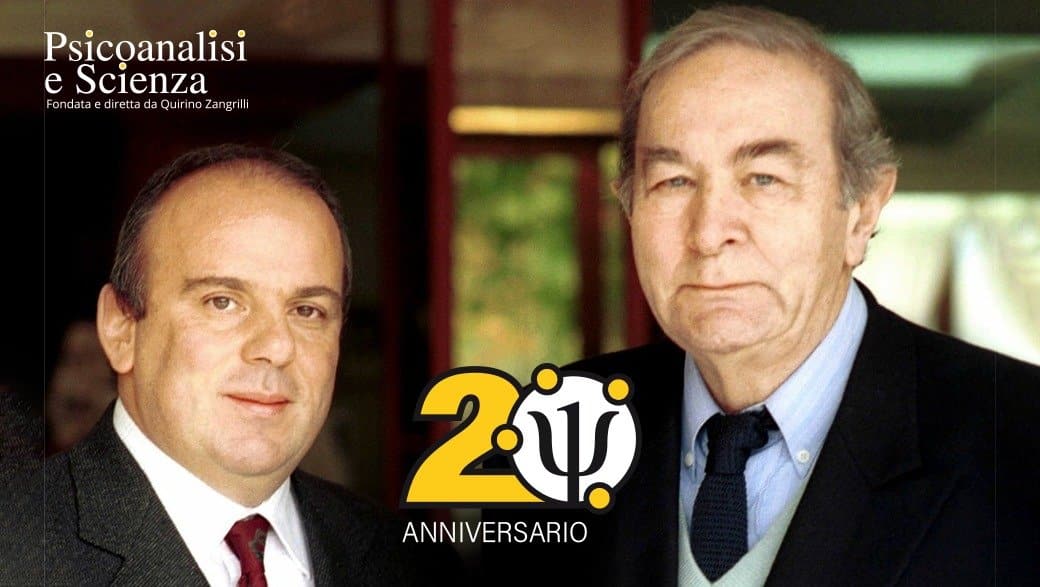
Il Dott. Quirino Zangrilli nasce a Fiuggi nel 1955. Laureato con Lode in Medicina e Chirurgia nel 1980, pratica la Psicoanalisi, con modalità intensiva, dal 1982.
E’ autore di 77 tra libri e pubblicazioni scientifiche. Ha partecipato in qualità di relatore o di presidente di sessione a numerosi Convegni scientifici nazionali ed internazionali.
Il suo libro “La vita: involucro vuoto”, pubblicato da Borla nel 1993, è stato in adozione dal 1994 presso la Cattedra di Psicologia Dinamica dell’Università di Torino.
Nel 1994 gli viene assegnato il “Premio Nazionale Ciociaria per la Medicina”.
E’ l’ideatore e fondatore della rivista multimediale “Psicoanalisi e Scienza”, la più seguita rivista di psicoanalisi on line al mondo in lingua italiana (Fonte: Entireweb, Alexa, Google, Virgilio, Arianna., etc.). Nel 2012 partecipa come Relatore alla Rassegna Scientifica di BergamoScienza.
Nel 2013 espone i suoi studi sull’nterazione materno-fetale nella Sessione Speciale dell’ XI Congresso Mondiale di Medicina Perinatale a Mosca con la relazione “Intrauterine Imprinting”.
Nel 2024 riceve il Premio Accademico d’Onore della Accademia Culturale Internazionale Cartagine 2.0.
Nel 2024 docente ad Almaty – Kazakhstan presso il workshop di psicoanalisi sul tema della violenza, promosso dall’Università di psicoanalisi di Mosca in collaborazione con l’Istituto svizzero di micropsicoanalisi.
Nel 2025 pubblica come curatore il libro “LA PSICOANALISI DI FRONTE AI COMPORTAMENTI ALIMENTARI CONTEMPORANEI” presso Armando Editore
Nel 2025 pubblica il libro “PSICOANALISI DEL TRAPIANTO D’ORGANO – IL VISSUTO DELL’ALIENO” presso Armando Editore
E’ docente presso l’Istituto di psicoanalisi di Mosca.
E’ membro Didatta dell’Istituto Svizzero di Micropsicoanalisi e della Commissione per la Pratica dello stesso.
—————
Doctor Quirino Zangrilli was born in Fiuggi in 1955. Graduated with honours in Medicine and Surgery in 1980, he practices Psychoanalysis, with intensive method, since 1982.
He is author of 77 scientific pubblications. He has attended as speaker or president of session to many national and international scientific Conventions.
His book “La vita:involucro vuoto” (Life: empty involucre), published by Borla in 1993, has been in use by the Chair of Dynamic Psychology at Turin’s University since 1994.
He is the author and founder of the multimedia review “Psicoanalisi e Scienza” (Psychoanalysis and Science), the most read Italian on line review of psychoanalysis.
In 2012 he participated as a Speaker at the Scientific Festival of BergamoScienza.
In 2013 he illustrated his research on the maternal-fetal interaction in the Special Session of the XI World Congress of Perinatal Medicine in Moscow with his relation “Intrauterine Imprinting”.
He is visiting teacher at Moscow Institute of psychoanalysis and training psychoanalist of Swiss Institute of Micropsychoanalysis.
In 2024 he is a teacher in Almaty – Kazakhstan at the psychoanalysis workshop on the topic of violence, promoted by the Moscow University of Psychoanalysis in collaboration with the Swiss Institute of Micropsychoanalysis.
In 2024 he received the Honorary Academic Award of the Carthage 2.0 International Cultural Academy
In 2025 he published as an editor the book “PSYCHOANALYSIS IN THE FACE OF CONTEMPORARY EATING BEHAVIOURS” at Armando Editore
In 2025 he published the book “PSYCHOANALYSIS OF ORGAN TRANSPLANTATION – THE EXPERIENCE OF THE ALIEN” at Armando Editore
—————
Le Le Docteur Quirino Zangrilli est né à Fiuggi en 1955. Diplômé avec mention en Médecine et Chirurgie en 1980, il pratique la psychanalyse depuis 1982, en utilisant une technique intensive.
Il est l’auteur de 77 livres et publications scientifiques.
Il a participé en tant que conférencier ou président de session à de nombreuses conférences scientifiques nationales et internationales.
Son livre « La vita: involucro vuoto » (La vie : une coquille vide), publié par Borla en 1993, a été adopté en 1994 par la chaire de psychologie dynamique de l’université de Turin. En 1994, il a reçu le “Prix national Ciociaria de médecine”.
Il a conçu et fondé le magazine multimédia “Psicoanalisi e Scienza”, qui est le magazine de psychanalyse en ligne en italien le plus suivi au monde. (Source : Entireweb, Alexa, Google, Virgilio, Arianna., etc.).
En 2012, il a participé en tant que conférencier à la colloque scientifique de BergamoScienza.
En 2013, il a exposé ses études sur l’interaction materno-fœtale lors de la session spéciale du XIe Congrès mondial de médecine périnatale à Moscou avec le rapport “Intrauterine Imprinting”. Il est chargé d’enseignement au cours de spécialisation de trois ans en psychanalyse, psychothérapie psychanalytique et consultation psychanalytique à l’Université de Moscou.
Il est membre didacticien de l’Institut Suisse de Micropsychanalyse et de la Commission pour la Pratique de celui-ci.
En 2024, il enseigne à Almaty – Kazakhstan à l’atelier de psychanalyse sur le thème de la violence, promu par l’Université de Psychanalyse de Moscou en collaboration avec l’Institut Suisse de Micropsychanalyse.
En 2024, il reçoit le Prix Académique Honoraire de l’Académie Culturelle Internationale Carthage 2.0.
En 2025, il publie en tant qu’éditeur le livre « LA PSYCHANALYSE FACE AUX COMPORTEMENTS ALIMENTAIRES CONTEMPORAINS » chez Armando Editore
En 2025, il publie le livre « PSYCHANALYSE DE LA TRANSPLANTATION D’ORGANES – L’EXPÉRIENCE DE L’ÉTRANGER » avec Armando Editore
—————
Доктор Квирино Зангрилли родился в Фьюджи в 1955 году. В 1980 году с отличием окончил факультет медицины и хирургии, с 1982 года интенсивно занимается психоанализом.
Является автором 77 книг и научных публикаций. Участвовал в качестве докладчика или председателя сессии в многочисленных национальных и международных научных конференциях.
Его книга «Жизнь: пустая оболочка», изданная Borla в 1993 году, с 1994 года используется на кафедре динамической психологии Туринского университета. Удостоен национальной премии «Ciociaria» в области медицины.
На XI Всемирном конгрессе перинатальной медицины в Москве, представил доклад «Внутриутробный импринтинг», исследование о взаимодействии матери и плода.
Ведет преподавательскую деятельность на курсе повышения квалификации и дополнительного образования по психоанализу, психоаналитической психотерапии и психоаналитическому консультированию в Московском Институте Психоанализа и психоаналитик по образованию в Швейцарском институте микропсихопсихологии.
В 2024 году является преподавателем в Алматы – Казахстан на семинаре по психоанализу на тему насилия, проводимом Московским университетом психоанализа в сотрудничестве со Швейцарским институтом микропсихоанализа.
В 2024 был награжден Почетной академической премией Академии Международной Культуры «Карфаген 2.0».
В 2025 году он опубликовал в качестве редактора книгу «ПСИХОАНАЛИЗ В РАМКАХ СОВРЕМЕННОГО ПИЩЕВОГО ПОВЕДЕНИЯ» в издательстве Armando Editore
В 2025 году он опубликовал книгу «ПСИХОАНАЛИЗ ТРАНСПЛАНТАЦИИ ОРГАНОВ – ОПЫТ ЧУЖОГО» совместно с Армандо Эдиторе
Lavoriamo dal 2000 per migliorare costantemente "Psicoanalisi e Scienza". Se apprezzi il nostro lavoro sostienici con una donazione! Servirà a far vivere la Rivista! Grazie!
Per fornire le migliori esperienze, utilizziamo tecnologie come i cookie per memorizzare e/o accedere alle informazioni del dispositivo. Il consenso a queste tecnologie ci permetterà di elaborare dati come il comportamento di navigazione o ID unici su questo sito. Non acconsentire o ritirare il consenso può influire negativamente su alcune caratteristiche e funzioni.
Funzionale
Sempre attivo
L'archiviazione tecnica o l'accesso sono strettamente necessari al fine legittimo di consentire l'uso di un servizio specifico esplicitamente richiesto dall'abbonato o dall'utente, o al solo scopo di effettuare la trasmissione di una comunicazione su una rete di comunicazione elettronica.
Preferenze
L'archiviazione tecnica o l'accesso sono necessari per lo scopo legittimo di memorizzare le preferenze che non sono richieste dall'abbonato o dall'utente.
Statistiche
L'archiviazione tecnica o l'accesso che viene utilizzato esclusivamente per scopi statistici.L'archiviazione tecnica o l'accesso che viene utilizzato esclusivamente per scopi statistici anonimi. Senza un mandato di comparizione, una conformità volontaria da parte del vostro Fornitore di Servizi Internet, o ulteriori registrazioni da parte di terzi, le informazioni memorizzate o recuperate per questo scopo da sole non possono di solito essere utilizzate per l'identificazione.
Marketing
L'archiviazione tecnica o l'accesso sono necessari per creare profili di utenti per inviare pubblicità, o per tracciare l'utente su un sito web o su diversi siti web per scopi di marketing simili.





 was born in Fiuggi in 1955. Graduated with honours in Medicine and Surgery in 1980, he practices Psychoanalysis, with intensive method, since 1982.
 Le Le Docteur Quirino Zangrilli est né à Fiuggi en 1955. Diplômé avec mention en Médecine et Chirurgie en 1980, il pratique la psychanalyse depuis 1982, en utilisant une technique intensive.
 Доктор Квирино Зангрилли родился в Фьюджи в 1955 году. В 1980 году с отличием окончил факультет медицины и хирургии, с 1982 года интенсивно занимается психоанализом.